

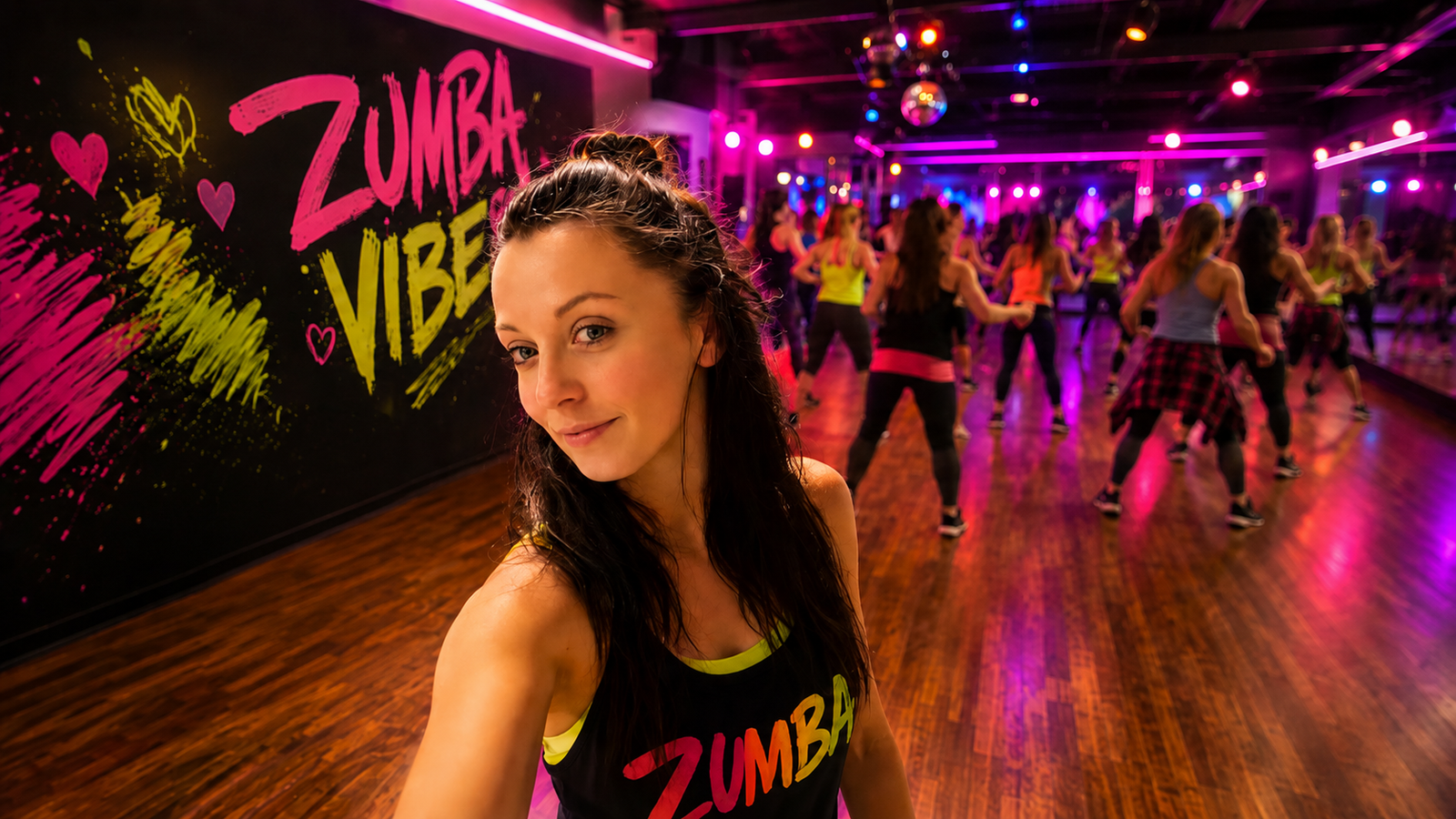
When people think about Zumba®, they usually think of music, dancing and a good cardio workout. But the benefits can go far beyond fitness.
Regular Zumba classes can help you become more active, improve your fitness, feel more comfortable moving to music, meet new people, discover dance styles from different cultures and even pick up words from languages you don’t normally hear.
Many people start because they want to exercise. They stay because of the music, the people, the community and the way they feel afterwards.
Here are 12 ways starting Zumba in the Netherlands can add something positive to your life.
1. You move more without feeling like you’re forcing yourself to exercise
One of the biggest challenges with exercise isn’t knowing that it’s good for us. It’s consistency.
A workout routine doesn’t help much if you hate doing it and stop after three weeks. Zumba combines physical activity with music, rhythm and choreography, so instead of watching the clock, you’re concentrating on the next move and the next song.
For many people, that makes regular exercise much easier to stick with.
2. You can improve your cardiovascular fitness
Zumba is a dynamic form of aerobic activity.
Depending on the class, your fitness level and how intensely you choose to move, you may spend a significant part of the session working at an elevated heart rate.
Regular aerobic activity can contribute to better general fitness and stamina.
Over time, everyday activities such as climbing stairs or walking longer distances may start to feel easier.
3. Your whole body gets involved
Zumba dancing isn’t just a workout for your legs. A typical class may involve movement through your:
- legs,
- hips,
- glutes,
- arms,
- shoulders,
- torso,
- stabilising muscles.
Because you’re moving in different directions and combining upper- and lower-body movements, your whole body stays involved. The difference is that it doesn’t necessarily feel like you’re doing repetitive exercise sets.
4. You work on coordination
The first class can feel chaotic, but after a few classes, you begin recognising recurring movements and patterns.
Your brain gets better at connecting: music + rhythm + visual cues + movement. That’s coordination in action. And like most things, it can improve with practice.
5. You become more aware of how your body moves
How do you shift your weight? How do you move your hips? Can you move your arms while your feet are doing something completely different?
Dance naturally makes you pay attention to movement. Over time, you may become much more aware of your posture, rhythm and body positioning.
It’s not about becoming a professional dancer. It’s about becoming more comfortable in your own body.
6. The dance floor becomes less intimidating
If weddings and parties usually involve you standing at the edge of the dance floor saying:
“I don’t dance,” regular classes may change that.
Not because you’ll suddenly know every dance. You’ll simply become more comfortable with:
- moving to a beat,
- dancing around other people,
- following music,
- making mistakes and carrying on.
Eventually, dancing stops feeling like a performance, it becomes something you can simply enjoy.
7. You discover different styles of music and dance
One of the best parts of Zumba is variety. During classes, you may encounter rhythms influenced by:
- salsa,
- merengue,
- reggaeton,
- cumbia,
- samba,
- bachata,
- Latin pop,
- Caribbean music,
- African rhythms.
You don’t need any previous knowledge. But after hearing and moving to these styles regularly, you begin to recognise different rhythms from around the world. You may even discover music you’d never have listened to otherwise. Your horizons broaden.
8. You may pick up words from other languages
A lot of music used in dance fitness features Spanish and Portuguese, along with other languages.
Repetition is powerful. When you hear the same songs and words regularly, you naturally begin recognising phrases.
You might start picking up words connected with:
- dancing,
- movement,
- love,
- parties,
- emotions,
- rhythm.
And sometimes curiosity takes over. You look up a song afterwards, read the lyrics and accidentally learn a few new words along the way.
9. You meet people without having to “network”
Regular group classes create something that adults often struggle to find: repeated, low-pressure contact with the same people.
You don’t have to attend a networking event. You don’t need a clever opening line. A few weeks later, you may be chatting before class, walking out together or grabbing coffee afterwards.
Friendships often grow from repeated small interactions.
10. It’s particularly valuable for expats
Moving to another country can be exciting and lonely at the same time. A lot of expats in the Netherlands experience loneliness. Group classes can help because you regularly meet people who live in the same area.
You don’t need to arrive with a friend. Come alone. Over time you may meet people from different countries, backgrounds and professions. And slowly, your local network grows.
11. You expand your comfort zone
First classes can be uncomfortable.
“What if I can’t follow?” “What if everyone else is better?” “What if I look ridiculous?”
Then you go. You miss a step. Nothing happens. And that’s when something useful starts happening.
You realise you can participate without being perfect.
That lesson isn’t limited to dancing. Doing something new regularly can make unfamiliar situations feel less intimidating in general.
12. You get an hour that belongs to you
Work. Family. Messages. Appointments. An endless to-do list.
For many women, a weekly class becomes one of the few times when they don’t have to organise anything. You don’t need to plan your workout. You don’t need to decide what exercise comes next.
The instructor leads. You follow the music. For one hour, you’re allowed to simply… be there.
So, can Zumba change your life?
No workout is a magic solution. But the right activity can create several positive changes at once.
With regular classes, you may:
- become fitter,
- move more,
- improve coordination,
- feel more confident dancing,
- discover new music,
- experience different dance cultures,
- pick up words from new languages,
- meet new people,
- make new friends,
- expand your social network,
- become more comfortable trying new things.
That’s why Zumba can become much more than a workout.
It can become part of your social life, your weekly routine and your connection to the city you live in.
Ready to try it?
If you’re based in Rotterdam or the surrounding area, join a Zumba Vibes by Bea class.
No dance experience is required.
[Find Zumba classes in Rotterdam]
No responses yet